The Future Through Design
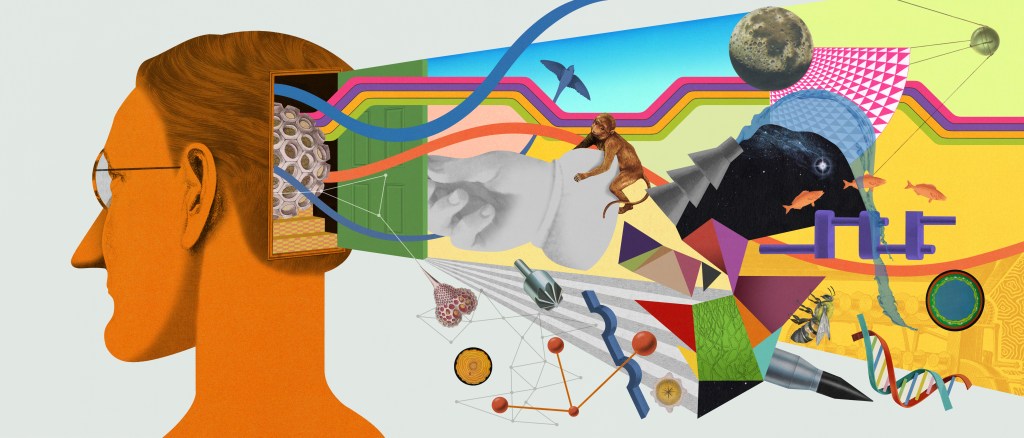
Many designers often ask one unimaginable question. “What if?” What if a brand could move beyond only being seen on a screen? What if products could evolve along their users? Design Fiction pushes that curiosity to its limit. It is asking us to visualize worlds that don’t even exist yet. In Ellen Lupton’s discussion of design futures, she introduces tools like scenario planning and the cone of plausibility, which help designers imagine and visualize change. But Design Fiction goes one step further because it doesn’t just predict the future, but it builds it through storytelling and visuals.
When my Visual Storytelling assignment had my group and I play the online card game, “The Thing from the Future”, we were given this wild prompt:
Arc: Transformation (a future shaped by major evolution)
Object: Tattoo
Terrain: Travel
That simple combination sent us head first into a hypothetical design exercise. We had to use our imagination on how visual design could transform the human body into a living, breathing map.
What Is Design Fiction Anyways?
Design Fiction is a term that was first created by Bruce Sterling and later expanded on by Julian Bleecker. It ultimately uses storytelling and design to explore what our futures could potentially look like. It’s not science fiction, but a design process that makes ideas tangible through visual artifacts such as mock ads, prototypes, posters, or even something like a fictional brand.
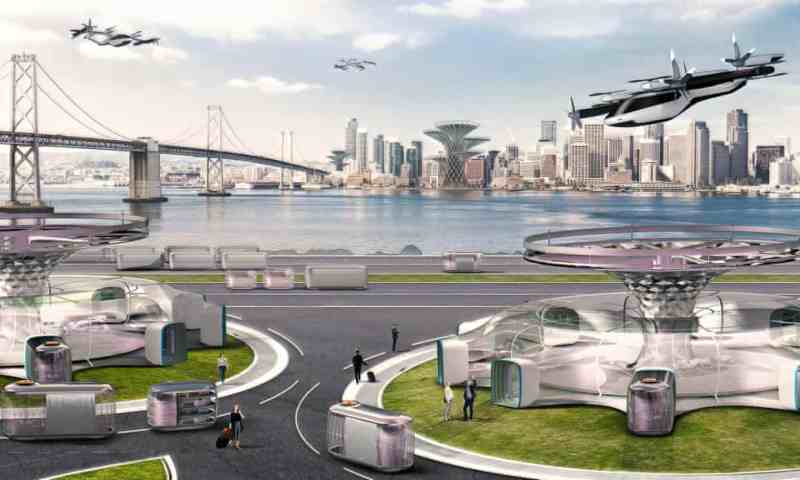
Design Fiction allows designers to ask, “What would this object/service look like if it existed already?” The power lies in making the something that is not real, look and feel real using design. Design to start conversations about technology, culture, and ethics before these specific futures may arrive. It makes us look from the perspective of people who might live in those imagined futures.
Photograph: Hyundai/PA
Tattoos That Can Travel
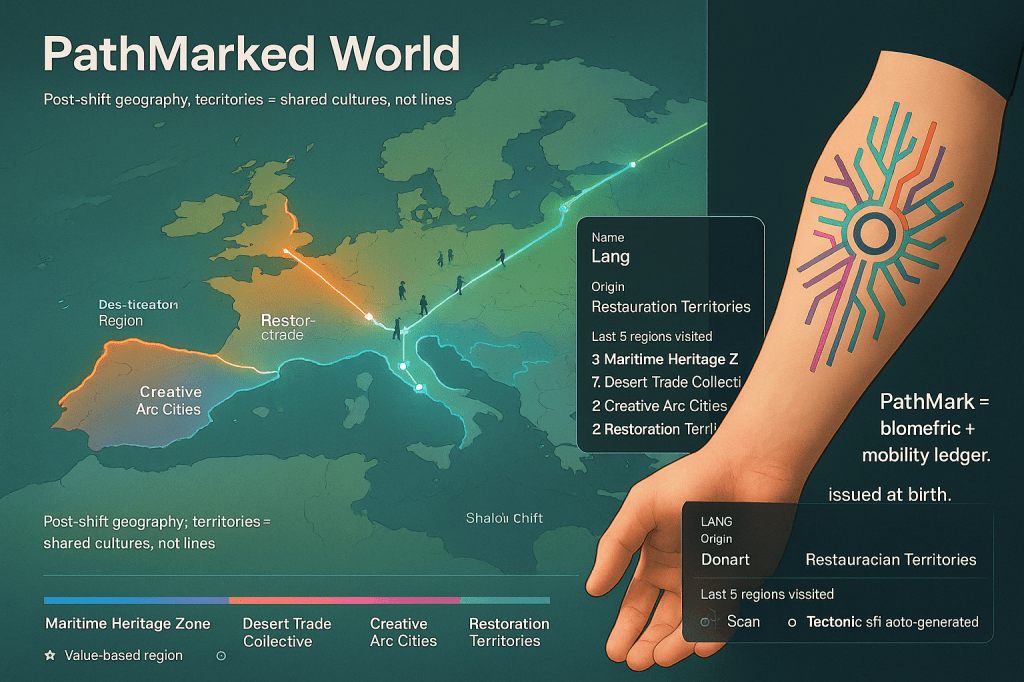
For our “The Thing from the Future” assignment, as a group, we imagined a transformative tattoo that evolves as a person travels. In this transformative future, we suspected there would no longer be any borders, so global movement has become so intertwined with identity to the point that travel is permanently recorded on the skin through interactive ink. Each destination unlocks a new colorful pattern, to serve as a living passport.
We believed that these tattoos are imprinted at birth and mandated by the government. We also decided that transit stations can scan the tattoo for instant identification and for travel clearance. Over time, the more places you travel to, the designs evolve uniquely, so no two are ever the same.
This speculative design challenged us to think visually about what this transformation would look like. Not just transformation for the world, but in the sense of how we could mark our journeys in the future. The tattoo became both data and art, connecting identity and geography in one design that continuously evolves.
The Role That Visual Design Has in Design Fiction
Visual design gives Design Fiction its power. Without visual storytelling, the future would remain unknown and scary, but with it, we can make even the wildest of ideas feel real. Think of how brands like IKEA, Google, or Apple use speculative visuals to preview upcoming technologies or sustainability goals.
In this way, Design Fiction isn’t just about predicting the future, but it’s also about creating a conversation to go with it. Visual design allows audiences to react by questioning, critiquing, and even wondering. A concept as simple as a hypothetical tattoo for travel, for instance, becomes a window into larger themes of identity, and technology. The style, color, and composition of that imagined tattoo design could tell us whether this future feels either utopian or dystopian. Every choice communicates how we should feel toward that specific future.

Why Design Fiction Truly Matters
When working on a hypothetical project like the travel tattoo, it reminded me that visual design isn’t just about visuals, but it’s also about anticipation as for what’s to come. As technology and culture evolve, visual designers will play an important role in shaping how people understand new possibilities in our future.
Design Fiction encourages designers to think critically about certain questions like these: “What will human communication look or sound like in 50 years?,” “How might sustainability, AI, or identity influence design choices?,” or even “How can we visualize futures that are not just possible, but are also desirable?”
By imagining abstract ideas like a tattoo that records your travels, we learn to design with anticipation. We learn to create visuals that ask questions, inspire, and also transform.
Citations
Bleecker, Julian. “What Is Design Fiction?” Near Future Laboratory, julianbleecker.com/designfiction/. Accessed 2 Nov. 2025.
Buday, Richard. “The Reality of Design Fiction: How Storytelling Can Save the World.” Common Edge, commonedge.org/the-reality-of-design-fiction-how-storytelling-can-save-the-world/. Accessed 2 Nov. 2025.
Fergie, Callum. “The Cone of Plausibility: Exploring Possible Futures.” LinkedIn, 15 Jan. 2024, http://www.linkedin.com/pulse/cone-plausibility-exploring-possible-futures-callum-fergie-w8frc/.
Lupton, Ellen. Design Is Storytelling. Cooper Hewitt, Smithsonian Design Museum, 2017.
“The Thing From The Future.” The Thing from the Future, ncsu-libraries.github.io/the-thing-from-the-future/. Accessed 2 Nov. 2025.

 Riley In Context
Leave a comment