
I didn’t know just how overwhelmed I was with online media until I took some time to reflect on my online reading habits this past week.
By reading up on Jakob Nielsen’s theories of how people typically read online, Nicholas Carr’s book Is “Google Making Us Stupid?“, Steven Pinker’s discussion of poor writing, Maria Konnikova’s advice on how to become a better online reader, and the rules set out in 16 Blog Rules and the AU Style Guide, I realized something uncomfortable but very clear. That was that most online content is not only hard to read, but it is also mentally exhausting to most.
Also, I learned from reading Nielsen’s F-pattern research that I happen to be a major scanner of texts, not a reader. I typically move from section headings, scan the first few words of the paragraphs, and then instantly determine whether I want to spend time reading all the extra information. Carr’s discussion on digital spaces preparing us for fragmented attention and stimulation also explained that type of skimming . The internet doesn’t just sidetrack us, but also happens to affect our willingness to wait for information.
Then, Pinker’s curse of knowledge came into play and made things worse, but in a good way. For once, after realizing how much writers tend to over explain by stuffing too many ideas into one paragraph, and assuming that readers are interested in background information, I couldn’t look past this. Writers are not doing this to try and trick readers into reading the entire thing, but they are truthfully just forgetting what it feels like to be a reader and read this information for the first time. The result of this then becomes writing that asks too much of someone who is already overwhelmed.
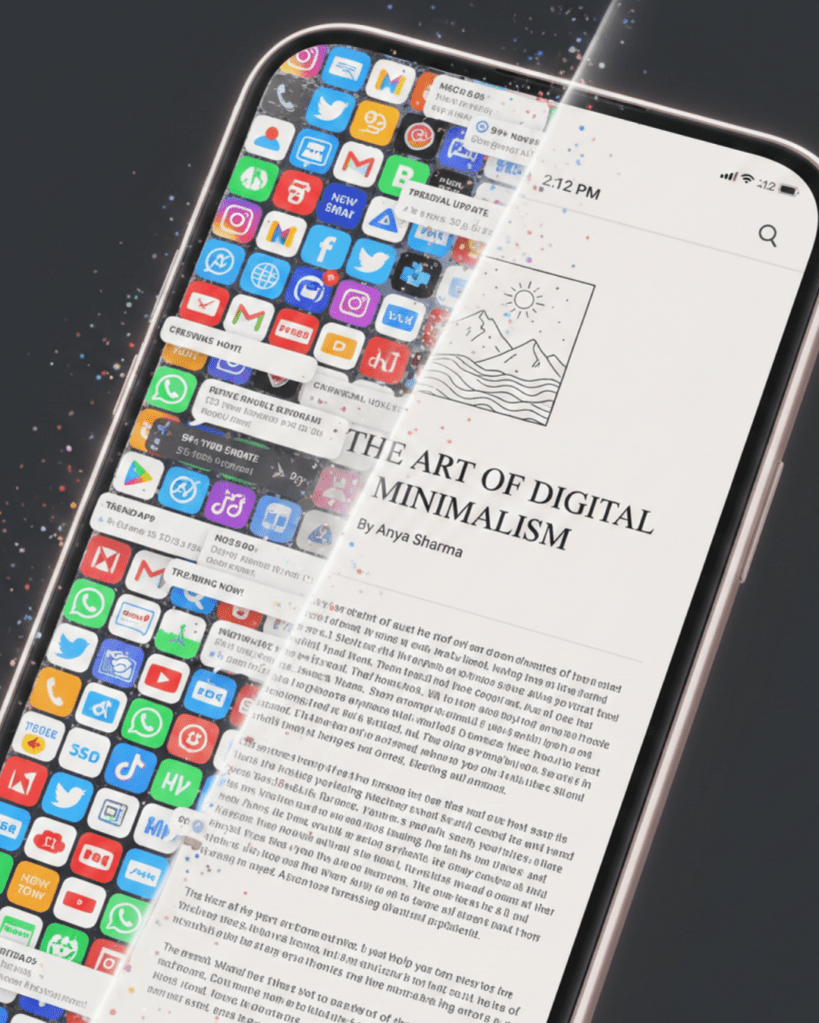
I would then argue that the ideas in Konnikova’s article bring it all together because a reader is used to an online space that is filled with many open tabs, notifications, and a lot of visuals that are distracting. For that reason, all sentences, and explanations appear to be weaker than others can make it into something that feels like a chore to read instead of an easy experience if it is forgotten.
This is why the 16 Blog Rules and the AU Style Guide articles felt more like a set of survival rules than actual style advice. Advice like putting value first, breaking the information into smaller chunks, having hierarchy, having only one idea per section, and also just keeping paragraphs short. These rules aren’t just about the way it looks to the reader, but they’re also about helping the reader preserve their mental reading capacity.
What came as the biggest surprise to me, however, is how good online writing is almost calming to me. Because good online writing is not only easy to read, it also tends to make it easier to think. It is perfect kind of quiet where it feels as if it is something to grab onto instead of something to fight with.
But reading these articles this week hasn’t totally changed the way I think about writing. I would say it’s also changed the way I think about reading online overall. If the content I am reading doesn’t feel worth my time then it creates an overwhelming sense of stress for me to even just look at it.
And to be honest, that makes me want to create content that is like relaxing, and not another thing to pile onto someone else’s list of stresses.
Citations:
Carr, Nicholas. “What the Internet Is Doing to Our Brains.” The Atlantic Monthly, vol. 302, no. 1, 2008. Accessed 25 Jan. 2026.
Konnikova, Maria. “Being a Better Online Reader.” Maria Konnikova, 16 July 2014.
Nielsen, Jakob. “How Users Read on the Web.” Nielsen Norman Group, 30 Sept. 1997, www.nngroup.com/articles/how-users-read-on-the-web/.
Pinker, Steven. The Source of Bad Writing the “Curse of Knowledge” Leads Writers to Assume Their Readers Know Everything They Know. 25 Sept. 2014.
Zinsser, William. On Writing Well: The Classic Guide to Writing Nonfiction. New York, Harperperennial, 2016.
“16 Rules of Blog Writing and Layout. Which Ones Are You Breaking? | Just Read.” Justread.link, 2020, justread.link/g43RhVlI7. Accessed 22 Jan. 2026.
“Types of Structure | Style Manual.” Www.stylemanual.gov.au, http://www.stylemanual.gov.au/structuring-content/types-structure.

 Riley In Context
Leave a comment