
When Design Turns Humanized
A designer’s greatest challenge isn’t the color palettes or the fonts, but it’s human psychology. Whether someone taps a button on their screen, reads a headline, or scrolls past a product entirely depends on how their brain perceives and processes visual information. As I worked through this thought, one idea became clear which was that good design aligns with how people actually sense, perceive, and act.
That being said, this is where behavioral economics comes in to play. It bridges the gap between what users should do and what they actually do, offering designers a lens into why certain visual strategies work.
Designing for Perception, Not Perfection
Gestalt Principles
In the article “Simplicity, Symmetry, and More,” Laura Bushe breaks down how Gestalt created so many modern design principles. Humans naturally look for patterns, which means our minds group objects by proximity, similarity, and continuity. Carolann Bonner’s article “Gestalt in Action” expands upon this, explaining how interfaces feel intuitive when designers honor these pattern-making decisions.
An example of this would be a cluttered navigation bar with inconsistent spacing forces the brain to work. But a menu that uses proximity and similarity to create clear groups feels easy to navigate.
When considered through the lens of behavioral economics, this reduces cognitive load and nudges users toward desired actions without force.

Perception
Saul McLeod’s Visual Perception Theory highlights how perception is not passive; it’s constructed. Top-down processing filters what we expect to see, while bottom-up processing handles sensory input. That’s why interface expectations (e.g., a logo linking home) matter—violating them confuses users.
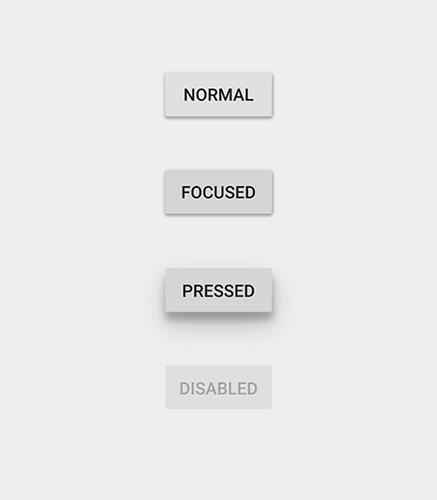
Depth cues also play a role. As Saul McLeod explains in his article, “Visual Perception Theory,” shadow, overlap, perspective, and texture create spatial understanding. Designers tend to use this subtly in shadows on buttons or card layouts. A Call To Action button, for example, demonstrates that it is pressable through depth perception alone.
Affordances
The Interaction Design Foundation’s article on affordances explains one key insight. That is that users know how to interact with objects because of their visual cues. This can include a button that looks tappable, a slider that looks draggable, or even a trash icon that looks deletable.
Behavioral economics reinforces this idea. The idea that people follow the path of the least work. If the affordance is clear, they act. If not, they hesitate or will totally abandon.
Behavioral Economics
In Bridgeable’s “Top 5 Behavioral Economics Principles for Designers” article, it outlines core strategies of default bias, social proof, scarcity, framing, and loss aversion.
When combined with perceptual principles, these nudges strengthen. An example of this would be something like a simple and symmetric layout plan, like Gestalt, that is paired with a highlighted, most popular plan, like social proof, that significantly increases conversions. It looks organized, feels trusted, and uses human behavior to make choices.
Multisensory Design
As Akna Marquez explains in “Introduction to Multisensory Design,” human experience is richer than a single visual channel. Astriata’s article “How Multi-Sensory Web Design Can Improve UX” goes further into this, with talking about how texture, animation, microinteractions, and even sound cues heighten engagement.
We now design not just for what people see but for the entire sensory system, which is another layer of behavioral design. An example of this is a light vibration when depositing a check on mobile banking that means the transaction was successful. That tactile cue, or the haptic feedback, reduces uncertainty.
When Design Crosses an Ethical Line
But behavioral design isn’t always friendly. Dark colors and patterns can hide cancellation buttons, exaggerate urgency, or mislead the perception of what something costs. When a design manipulates more than it guides, the trust breaks, and so does the relationship with the consumer. The lesson is that behavioral economics should clarify choices, not exploit them.
The Designer As A Guide
When surrounded in perception research and Gestalt logic, behavioral design becomes less about persuasion and more about guidance. Designers remove friction, support decision making, and respect the way humans interpret the world.
The Future of Behavioral Design
From sensory interfaces to visual layouts, the future of design lies in honoring human nature. Behavioral economics, when paired with perceptual psychology, doesn’t just create prettier interfaces, but it creates experiences that feel natural.
Because when design works with the brain rather than against it, users feel understood, supported, and empowered.

Citations:
Astriata. “How Multi-Sensory Web Design Can Improve The User Experience.” Astriata, 17 Oct. 2024, astriata.com/how-multi-sensory-web-design-improves-user-experience/.
Bonner Carolann. “Using Gestalt Principles for Natural Interactions.” ThoughtBot, 23 Mar. 2019, thoughtbot.com/blog/gestalt-principles.
Bridgeable. “The Top 5 Behavioural Economics Principles For Designers.” Bridgeable, 7 Feb. 2024, http://www.bridgeable.com/ideas/the-top-5-behavioural-economics-principles-for-designers/.
Busche, Laura. “Simplicity, Symmetry and More: Gestalt Theory and the Design Principles It Gave Birth To.” Canva, http://www.canva.com/learn/gestalt-theory/. Accessed 17 Nov. 2025.
Marquez, Akna. “Introduction To Multi-Sensory Design .” Akna Marquez, Akna Marquez, 4 Aug. 2025, http://www.aknamarquez.com/blog/2017/7/23/what-is-multi-sensory-design.
McLeod, Saul. “Visual Perception Theory in Psychology.” Simply Psychology, 16 June 2023, http://www.simplypsychology.org/perception-theories.html.
Northern Michigan University. “Depth Cues.” Depth_cues [Art & Design Foundations], artnet.nmu.edu/foundations/doku.php?id=depth_cues. Accessed 16 Nov. 2025.
“What Are Affordances?” The Interaction Design Foundation, Interaction Design Foundation, 26 Oct. 2025, http://www.interaction-design.org/literature/topics/affordances.

 Riley In Context
Leave a comment